Congestive Heart Failure Ghaziabad | CHF Treatment in Delhi NCR
Dr. Vivek Kumar is a leading Congestive Heart Failure Doctor in Ghaziabad, Delhi NCR practising at Max Super Speciality Hospital, Vaishali and provides advanced Congestive Heart Failure Treatment in Delhi NCR.
What is the main cause of Congestive Heart Failure?
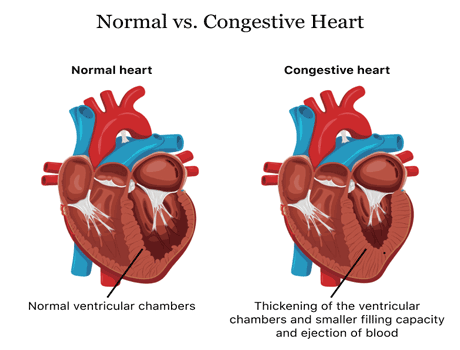
Cardiologists use the term congestive heart failure (CHF) to describe a patient whose heart does not pump enough blood to the rest of the body to meet the body’s energy demand.
Coronary artery disease is the most common cause of congestive heart failure. High levels of cholesterol and/or triglycerides in the blood are risk factors for coronary artery disease. High blood pressure is another major contributing factor.
Dr. Vivek Kumar is among the best Congestive Heart Failure Doctors in Ghaziabad, Delhi NCR,
practising at Max Super Speciality Hospital, Vaishali, and is fully equipped to
manage even complex cases of heart failure.
Causes of Congestive Heart Failure
Congestive heart failure can develop due to several factors.
In some situations the heart muscle pumps well, but the blood pathway is inefficient. Excess blood flows to the lungs, causing the lungs and eventually the heart to struggle. This can occur with certain congenital connections (shunts) in which oxygenated blood returns to the lungs instead of circulating to the body. Examples include:
- A patent ductus arteriosus – a blood vessel that connects the aorta to the main pulmonary artery in foetal life but normally closes within the first few days after birth. If it remains open and is large, the baby receives abnormally high blood flow to the lungs. This is common in premature infants.
- A large ventricular septal defect (VSD) – a hole between the two lower pumping chambers of the heart that causes excessive blood flow to the lungs.
Symptoms of Congestive Heart Failure
Signs of heart failure can appear at any age, including in young children born with heart defects. However, it most often affects older adults whose hearts have been weakened by other diseases.
Common symptoms include:
- Rapid breathing and bluish skin
- Asthma-like breathing spasms and wheezing
- Disorientation, brain fog and confusion (more common in older adults)
- Fainting, dizziness, weakness or fatigue
- Easy tiring with mild activity
- Anxiety, sense of suffocation and restlessness
- Hacking, dry cough that worsens when lying down
- Increased urination at night
- Nausea, abdominal swelling, tenderness or pain (may result from fluid buildup and backup of blood in the liver)
- Swelling (edema) caused by fluid retention, especially in the feet, ankles and legs
- Weight gain due to fluid retention or weight loss due to poor nutrient absorption and reduced appetite
How to Prevent Congestive Heart Failure
The best way to avoid congestive heart failure is to prevent or carefully manage the conditions that contribute to it.
Do not start smoking – it plays a major role in arterial damage that can lead to heart failure. Avoid second-hand smoke as well.
Eat heart-healthy foods low in saturated fat, trans fat, sugar and sodium. Focus on fruits, vegetables, low-fat dairy, lean proteins (such as skinless chicken) and healthy fats (olive oil, fish, avocados).
If you are overweight, aim for gradual weight loss. Regular physical activity supports both weight management and heart health.
Diagnosis
No single test diagnoses heart failure. Your doctor will consider your medical history, family history, physical examination and results of various investigations.
- Electrocardiogram (ECG/EKG): A non-invasive test that records the electrical activity of the heart, showing heart rate and any previous heart attacks.
- Chest X-ray: Provides images of the heart, lungs and other chest structures and can show an enlarged heart or lung congestion.
- BNP blood test: Measures B-type natriuretic peptide, a hormone used to assess the severity and prognosis of heart failure.
- Echocardiogram: An ultrasound of the heart that evaluates structure and function. Doppler ultrasound can additionally show blood flow patterns to the heart and lungs.
Treatment of Congestive Heart Failure
There is currently no cure for heart failure. The goals of treatment are to relieve symptoms, improve quality of life and prevent further deterioration. The specific plan depends on the stage and type of heart failure, underlying conditions and the individual patient. A typical plan may include:
Lifestyle changes: The same measures used for prevention. In addition, salt intake is usually restricted (to reduce fluid retention) and caffeine may be limited (because of possible heartbeat irregularities). Your doctor will advise on appropriate fluid intake, which may need to be restricted at times.
Medications
Several classes of medicines help control the symptoms of congestive heart failure:
ACE inhibitors: Relax the arteries and lower blood pressure, thereby reducing the workload on the heart.
Mineralocorticoid receptor antagonists (MRAs): Block hormones from the adrenal glands that can damage the heart.
Diuretics: Help relieve ankle swelling, fluid retention and shortness of breath by removing excess water and salt from the body. Loop diuretics and thiazide diuretics are the two main types commonly used.